
So you’ve got a product. People love it. Your friends keep telling you it should be in shops. Maybe you’ve even walked past a beautiful boutique and thought — my stuff would look incredible in there.
But then what? Do you just… walk in? Email? Cold call? Hope for the best and pray someone finds you on Instagram?
If you’ve ever Googled ‘how to get my product into stores Australia’ and come away more confused than when you started, this is the post you’ve been waiting for.
I’m Mel Robbins from thelotco, and I’ve been wholesaling products since 2001 — as a buyer for major brands, a seller at 50+ trade shows, a wholesale sales manager, and a coach who’s helped hundreds of Australian founders get their product onto shelves across the country (and internationally). So let’s skip the fluff and get into it.
Quick check before you dive in: If you want my full brutally honest checklist to see if you’re wholesale-ready, grab the free ’10 Steps to Wholesale Success’ guideat thelotco.com.au. This post goes deeper on the strategy.

First: what wholesale actually means (and why it’s worth doing)
Wholesale means selling your products to retailers — boutiques, gift stores, homewares shops, pharmacies, big box retailers, at a trade price, which they then mark up and sell to their own customers.
The retailer buys from you at roughly 40–50% of the recommended retail price (MSRP/RRP). You make less per unit, but you sell in volume, tap into an established customer base, and suddenly have sales agents for your brand all over the country spruiking your product without you having to do all the marketing yourself.
Done right, wholesale is one of the most stable and scalable revenue streams a product business can have. Done wrong, without the right margins, systems, or stockist strategy, it can be a very fast way to work really hard for very little money.
Wholesale can also be a slow burn at the start. It often takes a while to build momentum. But once it clicks? It’s like a snowball. It starts with 1–3 stores, then 10–30, then 50–100. And the compounding effects – better supplier deals, stronger brand recognition, easier range planning, make everything else in your business easier too.
The thelotco take: Wholesale and DTC (direct-to-consumer/ecommerce) are not either/or. The most profitable product businesses run both. Don’t put all your eggs in the Meta ads basket.
Step 1: Make sure you’re actually wholesale-ready


Before you fire off a single pitch email, there are a few non-negotiables to sort. This is where most founders trip up, they rush the pitch without having the foundations in place.
Your online presence is up to scratch
Update all your socials and website so they’re a true, professional representation of your brand. Buyers will Google you. They will check your Instagram. If it looks abandoned, inconsistent, or amateur — your pitch goes in the bin before they’ve even opened your catalogue. Make sure your contact details are current and easy to find.
Your imagery is investment-grade
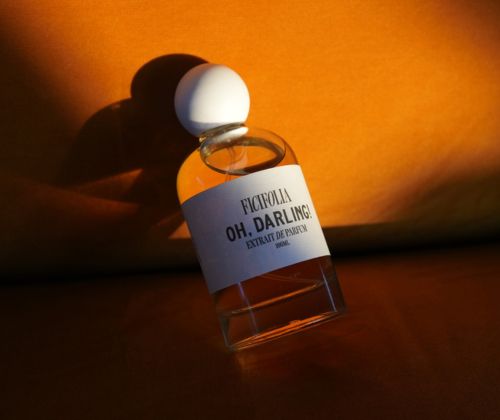
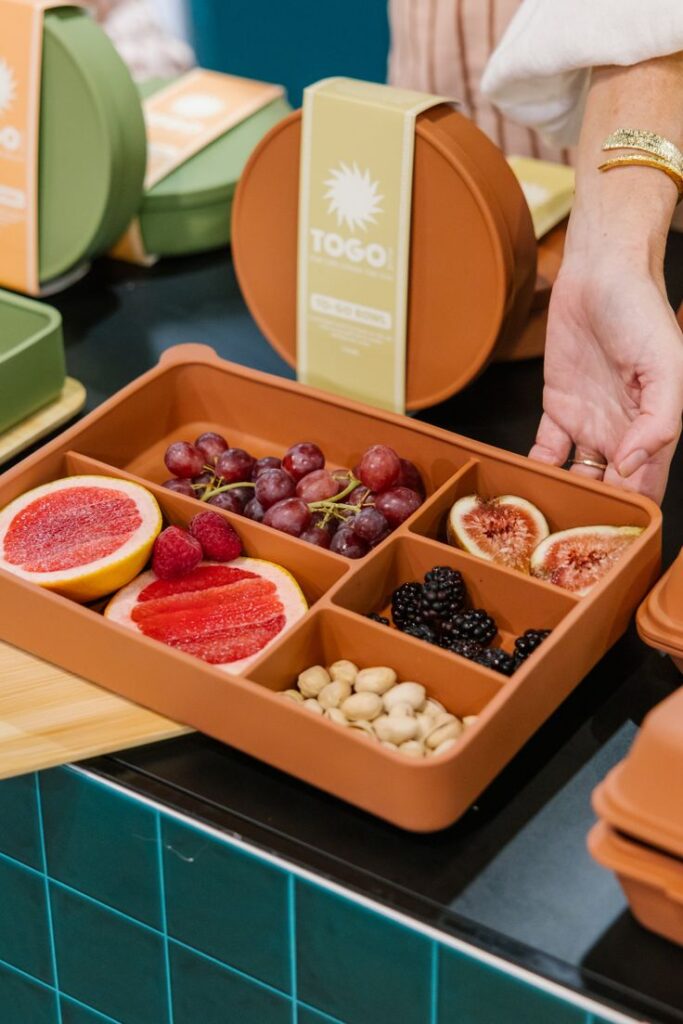
This is crucial. You cannot sell a product via email or online without great imagery. Great photography sells your product when you’re not in the room — it’s doing the heavy lifting on every pitch, every catalogue, every trade show stand. This is the one investment that pays for itself over and over. You need both lifestyle shots AND clean flat-lay product shots.
Your margins work for wholesale
This is the biggest one, and I’ll go deeper in a moment. But briefly: before you approach any retailer, you need to be able to offer them a minimum 100% markup (which is the industry standard). If your margins don’t support that, fix the pricing before you wholesale — not after.
Step 2: Get your pricing right — because this is where everything falls apart
Very few retailers will give you floor space and promote your product if you can’t give them a minimum 100% markup on what they pay you. That means:
Wholesale price = your cost of goods (COGS) × 2 → RRP = wholesale price × 2
So if your product costs $12 to make (fully landed — including packaging, freight, labelling, everything), your wholesale price should be around $24, and your RRP around $48.Plus GST if in Australia. (Each country has unique tax rules)
Also make sure your pricing matches your brand positioning. Does it reflect your target market, your packaging, your brand value? Don’t undersell yourself. Premium positioning supports premium pricing — and premium pricing is what makes wholesale viable.
Real talk: If your margins don’t work for wholesale, the answer is never ‘do wholesale at lower margins anyway.’ Fix your COGS, renegotiate with suppliers, or raise your RRP/MSRP. I have a free pricing guide on the website grab it at thelotco.com.au.
Step 3: Get your wholesale collateral sorted

Retailers are busy. They see hundreds of pitches. If yours looks unprofessional or if ordering from you looks complicated it goes straight in the bin (or doesn’t get opened at all!).
You need four things:
A wholesale catalogue (PDF)
Create a simple, professional introductory catalogue, not a 100-page manifesto. Lifestyle imagery, your brand story, product information, wholesale prices, RRP, minimum order quantities, and how to order. Keep it clean, keep it simple. K.I.S.S. Physical catalogues can also make a real difference to ongoing repeat orders, don’t underestimate them.
A line sheet
A stripped-back version of your catalogue that shows your full range at a glance. Great for trade shows and quick follow-up emails. Buyers want to be able to scan your range in thirty seconds.
An order form
Even if customers can order online, you need a proper order form. Some buyers want a physical version they can print out. Others want one that calculates their order cost automatically. It should include payment options, your terms and conditions, delivery lead times, and shipping costs.
A trade pricing guide
Clear, simple, no surprises. Your MOQs, reorder minimums, payment terms, and any trade-specific policies like returns or exclusivity arrangements.
Also worth checking: Are you retail-ready from a packaging and branding perspective? Do you offer point-of-sale (POS) display options for stores? Retailers want to know. Include this in your catalogue, it signals you understand how retail works.
thelotco shortcut: Inside Transform Your Wholesale, I’ve got done-for-you catalogue, line sheet, and order form templates. No starting from scratch.
Step 4: Find the right stockists — don’t just cold call everyone

Here’s what most people do: they Google ‘gift stores near me,’ write a list of 50 shops, and fire off the same generic email to all of them. It doesn’t work. And it’s a waste of your time.
Before you contact anyone, research whether they’re actually a fit for your brand. Create a target list of stores that match your brand positioning and price point. The retailers who will say yes are:
- Stores whose existing range is complementary to yours (not identical, not totally unrelated)
- Stores whose customer is your customer
- Stores at the right price point for your product
- Stores that are actively buying, not on a freeze
Visit stores in person where you can. Study their Instagram, website, and stockist lists. Know what they already sell before you approach them. A targeted list of 20 well-researched stores will outperform a spray-and-pray list of 200 every time.
Where to find stockists in Australia
- Trade shows — Life Instyle, Reed Gift Fairs, Melbourne Gift Fair. These are gold for making direct connections with buyers who are actively looking for new brands.
- Instagram — many indie retailers are highly active and use it to discover new brands. DMs work.
- Wholesale marketplaces like Faire, which connects product brands with retailers across Australia and internationally
- Referrals from existing stockists — ask who else they think would love your product
- Buying groups and industry associations for specific categories (homewares, beauty, food, stationery etc.)
Step 5: Write a pitch email that actually gets opened

Your wholesale pitch email has about four seconds to convince a busy retail buyer to keep reading. Here’s what works:
- A strong subject line, keep it to around 6–10 words. Use curiosity or FOMO rather than all-caps or too many exclamation marks. Make it personal by adding their first name.
- Who you are- in one sentence (please don’t give me history lesson)
- What your product is and why it’s relevant for their store specifically
- Your key credentials — Shark Tank feature? National press? Already stocked at XYZ?
- 1–2 low-res product images embedded in the email- not just attachments (even better have them in your signature too)
- A clear, single call to action: a link to your catalogue or a simple ‘can I send you our trade pack?’
Keep it short. Do not send a three-paragraph email about your brand story. Buyers don’t have time for that. Your only job in this email is to get them curious enough to say yes to the next step.
What not to do: Don’t lead with ‘I’ve always dreamed of being in stores like yours.’ Lead with something that makes the buyer think ‘ooh, that could work for my customers.’ Also, send from your own name, not your marketing department or a generic business email. (*inside my Transform Your Wholesale I have a custom gpt that helps with this!).
Step 6: Follow up (this is where most founders give up — don’t)
Please do not send one email and expect to hear back from your perfect store or buyer. It doesn’t work like that, and taking silence as rejection will cost you stockists you absolutely could have landed.
Repeat contact is needed. Most wholesale sales happen after the third, fourth, or fifth touchpoint. Build a simple follow-up sequence:
- Day 1: Send your pitch email with catalogue link
- Day 7: Follow up — a short, friendly ‘just checking this landed in the right place’
- Day 14: Share something new — a press mention, a new product launch, a stockist win, an upcoming trade show
- Day 30+: Check in again, or invite them to see you at an upcoming show
Most buyers aren’t ignoring you, they’re just flat out. Staying on their radar (without being annoying about it) is how you eventually get that yes.
Step 7: Nail your wholesale systems before you scale
This is the bit no one talks about, and it’s where things fall apart — especially once you’ve got 20, 30, or 50 stockists on the books.
Before you scale, you need:
- A clear system for taking and processing orders, a proper order form, not DMs and email threads
- An invoicing system that tracks exactly who owes you what and when
- Shipping and fulfilment processes that can handle volume without you dropping balls
- A system for managing reorders and staying in regular contact with your stockists
The businesses that build sustainable wholesale revenue have systems behind them. The ones that burn out after six months don’t. Getting into stores is only half the job, keeping them and getting reorders is the other half.
Inside Transform Your Wholesale: I cover all of this — the systems, the templates, the stockist management tools — so you’re building something that scales, not just scrambling to keep up.
Common wholesale myths I need to bust
Myth 1: I need to be in every store
No. Fifty underperforming stockists will drain your time, money, and energy. Twenty brilliant ones who reorder consistently will change your business. Be selective about who you pitch to and who you say yes to.
Myth 2: If I get into a big retailer, I’m set
Big retailers can be incredible, but they also come with the most demanding terms: long payment windows, high compliance requirements, heavy return policies. Go in with eyes open and make sure the numbers work.
Myth 3: I need to be at every trade show
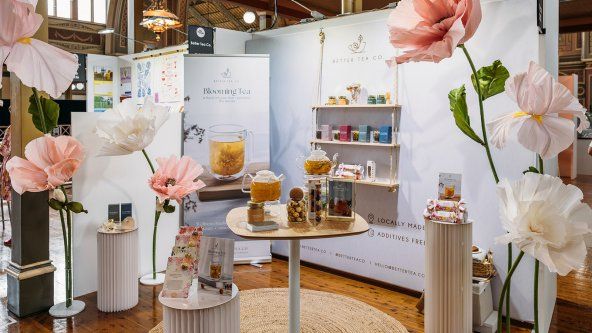
Trade shows are powerful but expensive. Start with one. Do it properly. Learn what works before you commit to a full calendar of them.
Myth 4: Wholesale means less profit
Only if your margins are wrong. Fix your pricing, and wholesale becomes one of your most profitable channels — because you’re selling in volume with far less marketing spend per unit. The economy of scale starts to work in your favour.
Myth 5: Silence means no
Persistence beats resistance. Wholesale is a slow burn at first. But the founders who stay consistent and keep showing up in the right way are the ones who eventually land the stockists and then the reorders that keep coming.
Are you wholesale-ready? Be honest.
If you’ve been nodding along to this thinking:
- “I haven’t nailed that yet…”
- “No wonder I’m not getting stockists…”
- “I want to do this right, not wing it…”
Then this is your sign to take the next step with some proper support behind you.
Ready to build a wholesale machine that sells for you?
Join my FREE training: Building a Wholesale Machine
I’ll walk you through the exact system product-based brands are using to land stockists, get repeat orders, and stop guessing. No fluff. No filler. Just what works.
Register here: thelotco.com/buildingawholesalemachine
Or DM me on Instagram @thelotco with the word ‘wholesalemachine’ and I’ll send you the link directly.
FAQ: Getting your product into stores in Australia
How much does it cost to start wholesaling in Australia?
The main upfront costs are building your wholesale catalogue and collateral, any trade show fees if you exhibit, and ensuring you have enough stock to fulfil opening orders. Many founders start wholesaling without significant extra costs beyond professional print materials and good photography, both of which pay for themselves quickly.
Do I need an ABN to sell wholesale in Australia?
Yes. You need an ABN to invoice retailers as a business. Most wholesale relationships in Australia also involve GST-inclusive tax invoices, so make sure your pricing and invoicing are set up correctly from day one.
How do I find retail buyers in Australia?
Trade shows (Life Instyle, Reed Gift Fairs, Melbourne Gift Fair), Instagram outreach, cold email pitches, online wholesale marketplaces like Faire, and referrals from existing stockists are all proven channels. The best approach combines several of these rather than relying on one. DO not cold call.
What is a minimum order quantity (MOQ)?
A minimum order quantity is the smallest amount a retailer must order to access your wholesale pricing. Setting an appropriate MOQ protects your margins and makes the relationship commercially viable. Most small to medium product businesses in Australia set opening order MOQs between $200–$1000. Better to be lower than higher when starting out.
How long does it take to get into stores?
It varies, some founders land their first stockist within weeks, others take several months. Consistency in follow-up, strong pitch materials, and targeting the right stores from the start all make a significant difference. The founders who treat it like a slow burn rather than a quick win are the ones who build real wholesale revenue.
About Mel Robbins — thelotco
Melissa Robbins is a product-based business coach with over 25 years of experience in retail, wholesale, and ecommerce across Australia. She’s built and sold two multi-million dollar product businesses, worked as a buyer for major brands, wholesaled globally, and exhibited at 50+ trade shows. She’s helped hundreds of Australian and International founders get their products into stores, including 12 clients who’ve featured on Shark Tank Australia. Find her at thelotco.com.au or @thelotco on Instagram.

Comments +